Septic Tank Pumping in Indianapolis, IN
Indianapolis Septic Tank Pumping
Septic Tank Pumping Services in Indianapolis
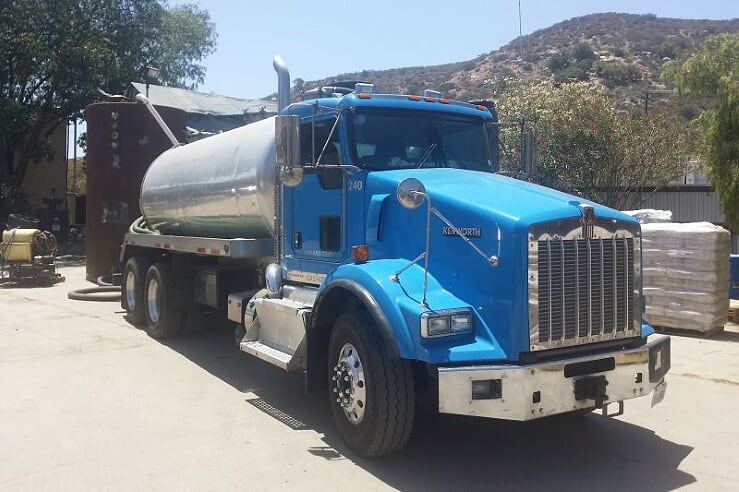
If you own a home or business in Indianapolis that runs on a septic system, keeping that system pumped and maintained isn’t optional — it’s the difference between a smoothly running property and a very expensive, very unpleasant emergency. At Indianapolis Grease Trap Services, we provide professional septic tank pumping in Indianapolis, IN, and throughout the surrounding Marion County area. Whether you’re dealing with a slow drain that just won’t quit, a yard that smells like something has gone wrong underground, or you simply can’t remember the last time your tank was serviced, our licensed team is ready to help. We bring the right vacuum trucks, the experience, and the local knowledge to handle septic pumping correctly — every single time.
Indianapolis sits on a mix of urban, suburban, and semi-rural land, and a significant portion of properties across the metro area — from Speedway to Greenwood, from Lawrence to Carmel — rely on private septic systems. These systems work hard every single day, quietly managing all the wastewater your household or business produces. But when they’re ignored? The consequences show up fast: sewage backups, foul odors, soggy drain fields, and repair bills that could have been avoided with a routine pump-out. That’s where we come in.
Signs Your Septic Tank Needs Pumping
Most Indianapolis homeowners don’t think about their septic tank until something goes wrong. By then, the situation is often messier — and costlier — than it needed to be. Knowing the warning signs means you can act before a minor maintenance issue becomes a major repair.
Here are the most common signals that your septic tank is overdue for a pump-out:
- Slow drains throughout the house: If multiple drains in your home are running slowly at the same time, that’s rarely just a simple clog. It often means your septic tank is filling up and the wastewater has nowhere to go quickly.
- Gurgling sounds from toilets or drains: That bubbling noise when you flush or run water is your septic system telling you it’s under pressure. Septic solids buildup can force air back through your pipes.
- Standing water or unusually green grass over the drain field: When a tank is full or failing, effluent can seep up to the surface above your drain field, creating wet, soggy patches or bright green strips of grass — even during dry weather.
- Sewage odors inside or outside: A properly functioning septic system should be odor-free. If you’re catching sewage smells near your drains, in your yard, or around the tank lid, that’s a clear sign something needs attention.
- Sewage backup in toilets or floor drains: This is the most serious warning sign and typically indicates the tank has reached capacity. Raw sewage backing up into your home is a health hazard and requires emergency septic pumping immediately.
- You can’t remember your last pump-out: If you’ve owned your property for three or more years and haven’t scheduled a septic pumping service, there’s a good chance your tank is overdue regardless of symptoms.
How Septic Tank Pumping Works
Understanding what actually happens during a septic pumping service can help you feel confident about the process and know what to expect from start to finish.
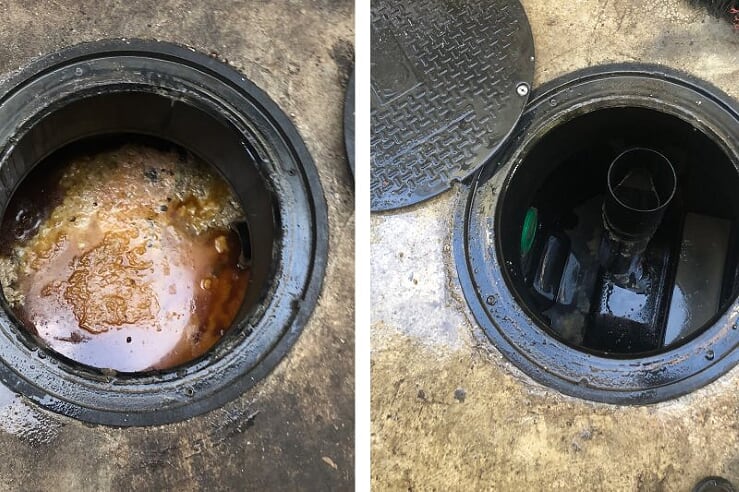
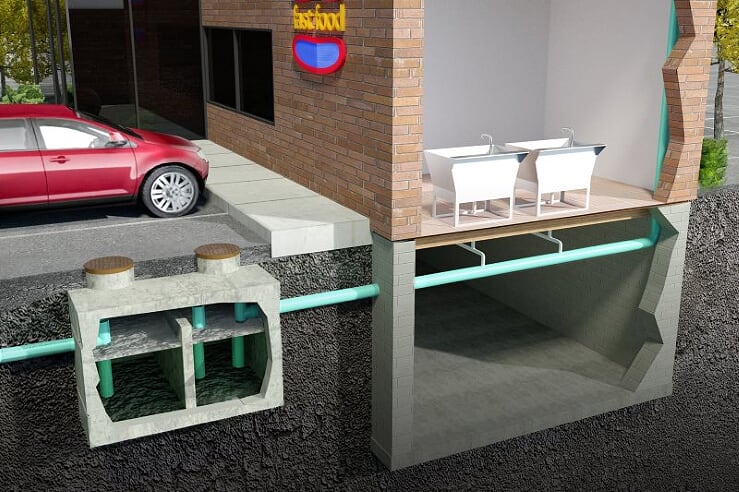
Your septic tank is an underground chamber — usually made of concrete, fiberglass, or polyethylene — that receives all the wastewater from your home or business. Inside the tank, solids sink to the bottom and form a layer of sludge, while lighter materials like fats and oils float to the top as scum. The clarified liquid in the middle, called effluent, flows out to the drain field where it’s slowly absorbed into the soil.
Over time, the sludge and scum layers grow. If they’re not removed regularly through professional septic tank pumping, they begin to overflow into the drain field — clogging the soil, destroying the system, and creating a costly replacement scenario that can run into thousands of dollars.
Here’s how a typical septic tank pumping service works at Indianapolis Grease Trap Services:
Step 1: Assessment and Locating the Tank
Our technician locates your septic tank and access lids — including any septic tank risers — and takes measurements to assess sludge depth, scum layer thickness, and overall tank condition. This lets us determine the right equipment and establish a proper maintenance schedule going forward.
Step 2: Waste Evacuation
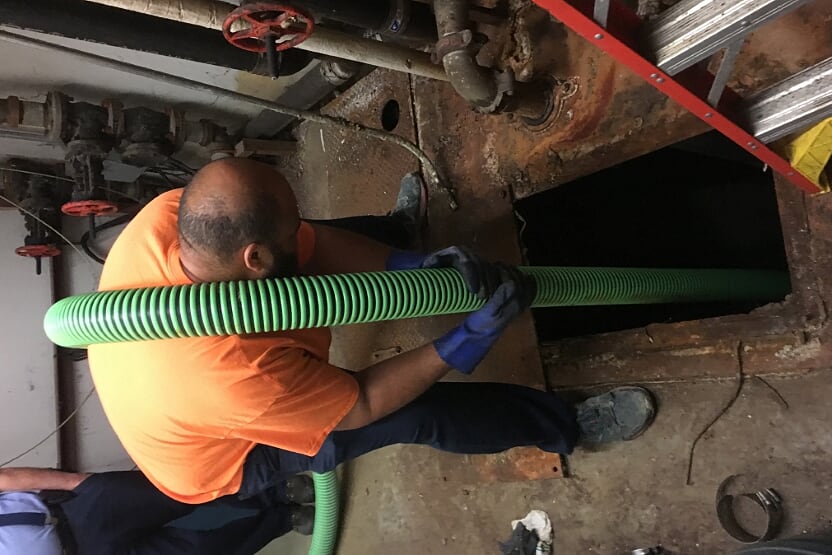
Using a specialized hose connected to our vacuum truck, we pump out all accumulated sludge, scum, and liquid waste from the tank. All septic waste is handled and transported according to environmental regulations and disposed of through licensed facilities — never dumped irresponsibly.
Step 3: Inspection, Cleanup, and Testing
Once the tank is emptied, we inspect the interior walls, inlet and outlet baffles, effluent filters, and the condition of the tank itself. We scrub residue from the tank walls, pipes, and crevices, then run a full operational check before we leave. If we spot anything that needs attention — a cracked baffle, a failing filter, early signs of drain field stress — we’ll let you know right away.
Residential Septic Tank Pumping in Indianapolis
For Indianapolis homeowners — whether you’re in a neighborhood near Broad Ripple, out toward Irvington, or on a larger lot in the outskirts of Marion County — a well-maintained septic system is one of the most important parts of keeping your property functional and your family safe.
Most residential septic tanks need to be pumped every three to five years, though that timeline shifts depending on household size, tank volume, and how much wastewater your home produces daily. A two-person household on a large tank might go five years between pump-outs. A large family on a smaller tank might need service every two years. The only way to know for certain is to have your tank inspected and measured by a professional.
Our residential septic tank pumping service covers everything from routine scheduled pump-outs to emergency situations when a backup has already started. We serve homes throughout Indianapolis and surrounding areas, and we operate 7 full-time pump trucks so you’re never waiting long when you need help.
We also perform baffle inspections during every pump-out. The inlet and outlet baffles are critical components that direct flow inside your tank — when they fail, solids can escape into the drain field and cause serious damage. Catching a failing baffle during a routine pumping job is far less expensive than replacing a collapsed drain field later.
Commercial Septic Tank Pumping in Indianapolis
Commercial properties in Indianapolis generate far more wastewater than the average home — and the consequences of a septic failure at a restaurant, school, industrial facility, or commercial kitchen are immediate, costly, and very public. If your business runs on a private septic system, you need a pumping partner who understands commercial-scale wastewater management and keeps your system running reliably.
Indianapolis Grease Trap Services works with restaurants, school cafeterias, manufacturing operations, industrial facilities, and commercial kitchens across Marion County and beyond. We understand that your business can’t afford downtime, and we schedule services at times that work around your operations — including early mornings, evenings, weekends, and holidays.
For commercial clients, we also handle all required documentation. Every pumping job generates service records and manifests that need to be filed with the local health department. We coordinate those filings on your behalf and keep all records on file at our local Indianapolis office, so you’re always prepared for an inspection without any extra effort on your end.
Businesses with multiple locations across the Indianapolis area also qualify for bulk service discounts, and our returning clients receive loyalty pricing. We also offer flexible monthly payment plans so your septic maintenance fits your budget without surprise invoices.
Why Routine Septic Maintenance Matters
It’s easy to ignore your septic system when it’s working properly — it’s underground, out of sight, and rarely makes itself known. But neglecting routine septic maintenance is one of the most expensive mistakes a property owner in Indianapolis can make.
Here’s the reality: a septic system that’s properly pumped and inspected on a regular schedule can last for decades. A system that’s ignored will fail — and septic system replacement in the Indianapolis area can cost anywhere from several thousand dollars to well over ten thousand depending on the size and complexity of the system. Routine pump-outs and inspections cost a fraction of that.
Beyond the cost of outright system failure, there are other serious risks to consider:
- Drain field damage from solids overflow is almost always permanent and irreversible without full replacement.
- Groundwater contamination from a failing septic system can create serious health and legal liability.
- Sewage backups inside your home create health hazards and property damage that can take weeks to fully remediate.
- Health department violations for commercial properties can result in fines, forced closures, and license issues.
A consistent septic maintenance schedule — based on your specific tank size and usage — is the single most effective way to protect your property and avoid these outcomes. Our team will help you determine the right pumping frequency and
Common Septic Problems We See Around Indianapolis
After years of working on septic systems throughout Marion County and the surrounding Indianapolis metro, we’ve seen the same issues come up again and again. Knowing what’s most common in this area can help you stay ahead of potential problems.
Neglected Tanks
By far the most common issue we encounter is tanks that simply haven’t been pumped in too long. Many Indianapolis homeowners move into a property without a clear record of when the last pump-out occurred — and they find out the hard way when the system starts showing signs of failure. If you’ve recently purchased a home with a septic system and don’t have documentation, schedule an inspection before a problem develops.
Grease and Food Solids Buildup
For commercial properties with kitchens — restaurants, cafeterias, food production facilities — grease and food solids enter the septic system in much higher volumes than in residential settings. Without proper grease management and frequent septic pumping, this buildup accelerates dramatically and can clog inlet pipes, damage baffles, and overwhelm the drain field much faster than expected.
Drain Field Saturation
Marion County’s soil composition varies widely across the metro area. In areas with heavier clay soils — common in parts of the Southside and outer suburban zones — drain fields can become saturated more easily, especially during the wet seasons Indianapolis sees in spring. When a drain field is already stressed, an overfull tank accelerates the problem significantly.
Damaged or Missing Effluent Filters
Effluent filters are installed in the outlet baffle of a septic tank to prevent solids from flowing into the drain field. They’re an important protective component — but they also need to be cleaned or replaced periodically. We inspect and service effluent filters during every pump-out and flag any that need replacement before they cause downstream problems.
Root Intrusion and Structural Damage
Tree roots are a silent threat to septic systems, especially in older Indianapolis neighborhoods like Irvington, Fountain Square, and Bates-Hendricks where mature trees are common. Roots can infiltrate tank walls, damage inlet and outlet pipes, and compromise the structural integrity of older concrete tanks. Catching this during a routine inspection can save you from a much more serious repair.
Our Septic Pumping Process
At Indianapolis Grease Trap Services, we follow a consistent, thorough process on every job — whether it’s a routine scheduled pump-out or an emergency call at 2 in the morning.
Contact Us – Call or text us at (317) 548-1925 to describe your septic service needs. Our team will ask the right questions to understand your situation and get you on the schedule quickly.
On-Site Assessment – One of our licensed technicians will come to your property, locate and access your tank, and perform a thorough evaluation — measuring sludge levels, checking baffles, and assessing the overall condition of the system.
Free Estimate – We provide a full-faith estimate before any work begins, honored for 30 days with no obligation. We’ll also match any written price from a licensed competitor.
Vacuum Truck Pumping – Our specialized vacuum trucks extract all sludge, scum, and wastewater from your tank. All septic waste is transported and disposed of responsibly through licensed recycling and disposal facilities — in full compliance with Indianapolis and Indiana environmental standards.
Inspection and Cleanup – After pumping, we inspect the tank interior, inlet and outlet baffles, effluent filters, and tank walls. We clean residue from all interior surfaces and confirm everything is functioning properly before we leave.
Documentation – For commercial clients, we file all required service records and manifests with the local health department on your behalf. All documentation is kept on file at our Indianapolis office.
Why Choose Indianapolis Grease Trap Services
There are a lot of companies in the Indianapolis area that offer septic services. Here’s what makes Indianapolis Grease Trap Services the call worth making:
Owner-Operated Business – Carl and the team work hands-on every day. When you call, you’re working with people who take pride in every job — not a call center routing you to whichever contractor is available.
Over 15 Years of Experience – We’ve worked on systems across all of Marion County and the surrounding areas, from downtown Indianapolis neighborhoods to properties well outside the I-465 beltway.
7 Full-Time Pump Trucks – We have the equipment capacity to respond quickly and handle jobs of any size — residential pump-outs, large commercial tanks, and multi-location service schedules.
Licensed, Bonded, and Insured Technicians – Every technician on our team is fully licensed and insured. You can trust that the person servicing your system knows exactly what they’re doing.
24/7 Availability — Including Holidays – Septic emergencies don’t follow a business schedule. We’re available around the clock, every day of the year, including weekends and major holidays.
City of Indianapolis Permitted Transporter – We operate with all required city permits for waste transport and disposal, keeping your service fully compliant with Indianapolis regulations.
Compliance and Filing Support – We handle health department filings and maintain all service records on your behalf — a genuine time-saver for commercial clients managing operational compliance.
Loyalty and Volume Discounts – Returning clients receive loyalty pricing. Multi-location businesses qualify for bulk service discounts. We build long-term relationships, not one-time transactions.
Eco-Friendly Waste Disposal – We partner with recycling facilities to repurpose grease and septic waste as alternative fuel or soil additives wherever possible, reducing environmental impact.
A+ Reputation Built on Word of Mouth – Our client base has grown almost entirely through referrals and repeat business — the most honest measure of a service company’s quality.
Areas We Serve Around Indianapolis
We’re centrally located at 961 W 29th St in downtown Indianapolis and primarily serve everything inside the I-465 loop — all of Marion County. We also regularly travel beyond the beltway for clients who need us. Some of the specific communities and neighborhoods we serve include:
- Indianapolis (all Marion County zip codes)
- Carmel, IN
- Fishers, IN
- Greenwood, IN
- Lawrence, IN
- Speedway, IN
- Broad Ripple
- Irvington
- Fountain Square
- Bates-Hendricks
- Beech Grove, IN
- Southport, IN
- Rocky Ripple
- Warren Township
- Pike Township
- Washington Township
- Perry Township
- Decatur Township
Not sure if we serve your area? Give us a call or text at (317) 548-1925. If we can get to you — and we usually can — we will.
Frequently Asked Questions About Septic Tank Pumping in Indianapolis
How often does a septic tank need to be pumped?
For most residential properties, septic tank pumping is recommended every three to five years. The exact frequency depends on the size of your tank, the number of people in the household, and how much wastewater your property generates daily. Smaller tanks and larger households need more frequent service. A professional inspection will give you a clear answer for your specific system.
How do I know if my septic tank is full?
The most common signs of a full septic tank include slow-draining fixtures throughout the home, gurgling sounds from drains or toilets, sewage odors inside or outside, wet or unusually green areas over the drain field, and in serious cases, sewage backup. If you’re seeing any of these, call us right away.
What happens if I don’t pump my septic tank?
If a septic tank is not pumped on a regular schedule, sludge and scum accumulate until there’s no room left for effluent to settle. Solids then flow into the drain field, clogging the soil and eventually causing complete system failure. Drain field replacement is one of the most expensive septic repairs a property owner can face — and it’s almost entirely avoidable with routine maintenance.
Do you offer emergency septic pumping in Indianapolis?
Yes. Indianapolis Grease Trap Services is available 24 hours a day, 7 days a week — including weekends and holidays. If you’re dealing with a septic backup, overflow, or any urgent wastewater issue, call or text us at (317) 548-1925 and we’ll get someone to your property as quickly as possible.
How long does a septic tank pumping service take?
Most residential pump-outs take between 30 minutes and 2 hours depending on tank size, access, sludge levels, and the condition of the system. Larger commercial tanks may take longer. We’ll give you a clear time estimate before we start so you can plan accordingly.
What is included in a septic tank inspection?
Our septic inspection covers the condition of the tank interior, inlet and outlet baffles, effluent filters, the structural integrity of the tank walls, and the overall sludge and scum levels. We also check for signs of drain field stress and any issues that could cause problems down the road. If we find anything that needs attention, we’ll explain it clearly before any additional work is discussed.
Can you pump a septic tank that’s already backed up?
Yes. If your system is already experiencing a backup, call us immediately. We handle emergency septic pumping in Indianapolis and throughout Marion County. Our vacuum trucks are equipped to manage high-volume waste situations, and our technicians know how to handle backups safely and efficiently.
Do you service commercial septic systems?
Absolutely. We work with restaurants, school cafeterias, commercial kitchens, manufacturing facilities, and industrial operations throughout Indianapolis. We also handle all health department filings and compliance documentation for commercial clients and offer flexible service schedules to work around your business hours.
Ready to Schedule Your Septic Tank Pumping in Indianapolis?
Don’t wait for a backup to tell you it’s time. Whether you’re overdue for a routine pump-out, dealing with an active problem, or moving into a property with an unknown service history, Indianapolis Grease Trap Services is ready to help.
We’re locally owned, owner-operated, and based right here in Indianapolis at 961 W 29th St. Our licensed technicians are available around the clock — call or text (317) 548-1925 any time to get started. We’ll come out, assess your system, and give you a free estimate with no obligation and no pressure.
Your septic system protects your home, your property, and your family. Let our team protect it for you.