Nursing Home Grease Trap Pumping in Indianapolis, IN
Indianapolis Nursing Home Grease Trap Pumping
Nursing Home Grease Trap Pumping Services in Indianapolis
Running a nursing home or long-term care facility in Indianapolis means operating under a level of scrutiny that most businesses never face. Health inspections are frequent, compliance standards are strict, and the people depending on your facility deserve an environment that is clean, safe, and free from the kind of sanitation problems that a neglected grease trap can cause. At Indianapolis Grease Trap Services, we provide professional nursing home grease trap pumping in Indianapolis, IN, and throughout Marion County, helping care facilities maintain the clean kitchens, compliant drainage systems, and complete service documentation that regulators and residents both expect.
Nursing home kitchens operate differently from restaurant kitchens, but the grease they generate is just as real and accumulates just as steadily. Three meals a day, seven days a week, for a full resident population — that’s a consistent, high-volume kitchen operation that puts real demand on a grease trap. When that trap isn’t pumped on a schedule that matches the actual usage, problems follow: slow drains in the kitchen, sewage odors near food preparation areas, backed-up lines during peak meal service, and the kind of health department findings that no facility administrator wants to deal with. Our team serves nursing homes, assisted living facilities, memory care centers, and long-term care operations across Indianapolis, Carmel, Fishers, Greenwood, Lawrence, and throughout the surrounding Marion County area.
Why Nursing Home Kitchens Demand Consistent Grease Trap Service
A nursing home kitchen isn’t a hobby kitchen or even a typical commercial kitchen. It’s an operation that runs on a fixed schedule, every single day, with no days off and no slow seasons. Breakfast, lunch, dinner, and snacks for a full resident population — prepared fresh, on time, and in compliance with dietary requirements that often involve cooking methods generating significant grease output.
The volume of fats, oils, and food solids entering a nursing home grease trap is substantial and predictable. Unlike a restaurant that might have a slow Tuesday or a seasonal dip in covers, a nursing home kitchen operates at essentially the same volume every day of the year. That consistency means the grease trap fills at a steady, measurable rate — and it means that skipping or delaying a service visit has compounding consequences that show up on a reliable schedule.
Beyond volume, nursing home kitchens often prepare meals that are specifically higher in certain fats and oils because of the nutritional and dietary needs of elderly residents. Calorie-dense, nutrient-rich meal preparation frequently involves cooking methods — roasting, sautéing, frying — that contribute more grease per meal than lighter commercial cooking operations. The result is a grease trap that may fill faster than facility administrators expect, particularly if the service schedule was set based on assumptions rather than actual usage data.
There’s also the regulatory dimension. Nursing homes and long-term care facilities in Indiana operate under oversight from multiple agencies, including the Indiana State Department of Health. Kitchen sanitation is a standard inspection category, and a grease trap that’s overflowing, producing odors, or lacking current service documentation can contribute to findings that affect a facility’s compliance standing. Keeping the grease trap on a tight, well-documented service schedule is part of running a kitchen that passes inspection without issues.
Signs Your Nursing Home Grease Trap Needs Pumping
Facility administrators and kitchen managers at Indianapolis nursing homes should know the early warning signs of a grease trap that needs service. In a care environment, these problems need to be addressed before they affect residents, staff, or inspectors — not after.
- Slow drains in the kitchen or dish room – Kitchen drains that run slowly during or after meal service are one of the first visible signs that the grease trap is filling up and restricting flow through the outlet pipe. In a high-volume kitchen environment, slow drains during peak service times are more than an inconvenience — they disrupt operations and create sanitation concerns.
- Grease or sewage odors near food preparation areas – Any detectable sewage or grease odor in or near a nursing home kitchen is a serious concern. A grease trap that’s past capacity produces hydrogen sulfide gas as accumulated waste decomposes, and that gas travels back through the drain system into the kitchen. In a food service environment serving vulnerable residents, odors near food preparation areas are both a sanitation issue and a health department red flag.
- Drain backups during peak meal preparation – If drains are backing up during the busiest parts of kitchen operations — breakfast prep, lunch service, dinner cleanup — the grease trap is likely at or beyond capacity and no longer intercepting waste effectively. Backups during peak usage are a sign that the system is failing under the volume it’s being asked to handle.
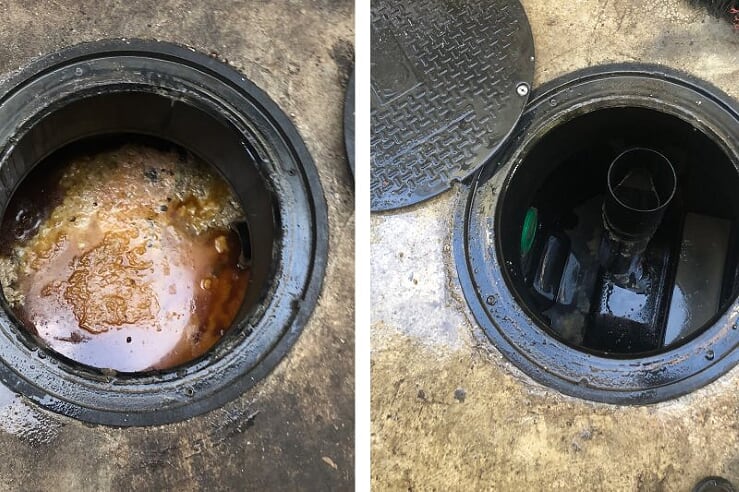
- Grease visible at cleanouts or trap access points – Grease surfacing at exterior cleanouts, around the trap lid, or in nearby drainage areas means the trap has exceeded its capacity and is passing grease directly into the drain line. At this stage, the trap is no longer functioning as intended.
- Staff or resident complaints about kitchen odors – In a nursing home environment, staff work in the kitchen for extended periods, and residents may be in adjacent dining areas. If kitchen staff or residents are noticing persistent odors that weren’t there before, the grease trap is a logical first place to investigate.
- Documentation gaps or upcoming inspections – If your facility is approaching a scheduled health inspection and the grease trap service records aren’t current, getting the trap pumped and documentation updated before the inspection is the straightforward solution. We can turn around service and documentation quickly for facilities with time-sensitive compliance needs.
How Nursing Home Grease Trap Pumping Works
Our process at nursing home facilities is built around minimizing disruption to kitchen operations and resident care schedules while delivering a thorough, compliant service. Here’s what to expect:
Step 1: Coordination With Facility Management
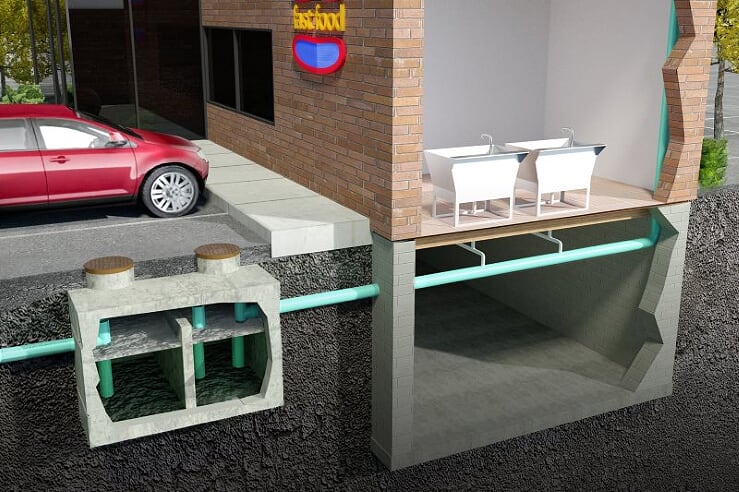
Before any work begins, we coordinate with the facility administrator or kitchen manager to understand the kitchen schedule, identify the best time for service that minimizes disruption to meal preparation, and confirm the location of all grease trap or interceptor access points on the property.
Step 2: Pre-Service Assessment
Our technician inspects the grease trap before pumping — measuring the current grease layer and solids accumulation, assessing the condition of the inlet and outlet baffles, and identifying any issues that need attention beyond routine cleaning. This assessment also helps us establish or confirm the appropriate service frequency for the facility going forward.
Step 3: Full Waste Evacuation
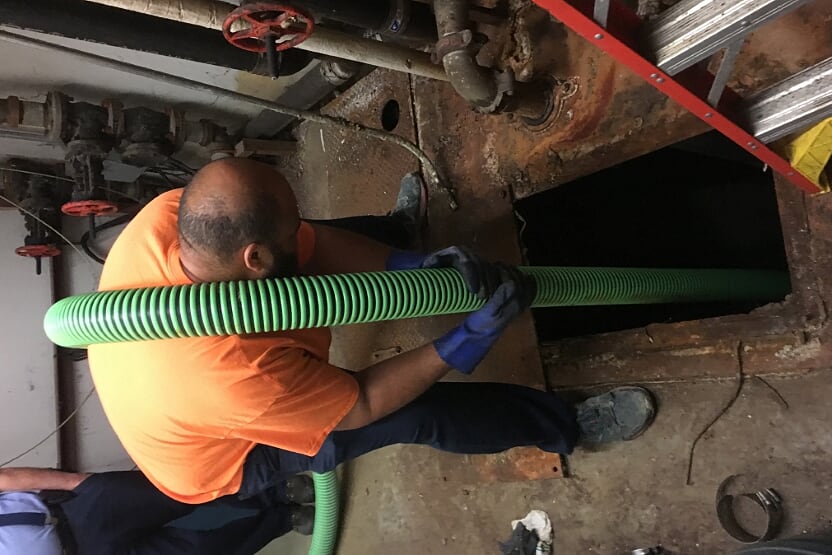
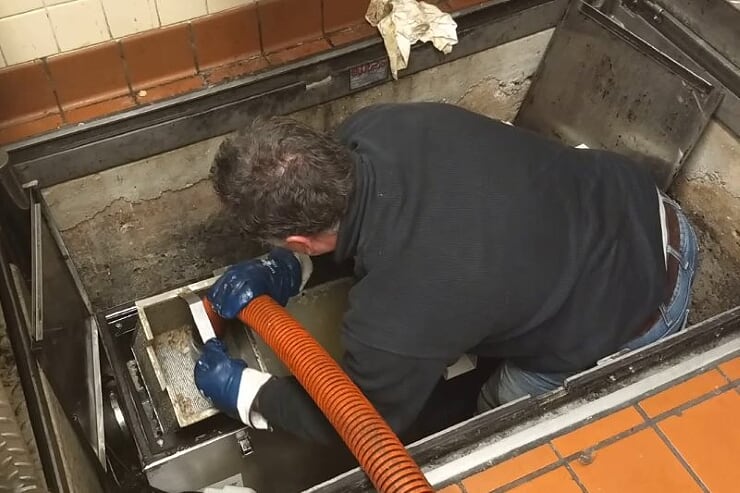
Using our vacuum truck equipment, we pump out all accumulated grease, oils, food solids, and wastewater from the trap completely. Every service is a full cleanout — we don’t leave significant waste behind. A partial pump-out only delays the next problem; a full evacuation gives the system a clean start.
Step 4: Interior Scrubbing and Cleaning
After pumping, we scrub the interior walls, baffles, lid, and all interior surfaces of the trap to remove grease film, biofilm, and residue. This step is particularly important in a nursing home setting where sanitation standards are high and odor control matters. A properly scrubbed trap resists rapid re-accumulation and stays cleaner between service visits.
Step 5: Baffle and Component Inspection
We inspect the inlet and outlet baffles for cracks, deterioration, or blockages. We also check the trap body for structural integrity and flag any components that need repair or replacement. Identifying a failing baffle during a routine service visit is far less disruptive than dealing with a baffle failure between visits.
Step 6: Service Documentation and Compliance Filing
We prepare all required service records and manifests following each visit. For nursing home facilities with health department reporting requirements, we coordinate filings directly with the appropriate local and state authorities on your behalf. All documentation is kept on file at our Indianapolis office and is available to the facility whenever it’s needed — for routine record-keeping, health inspections, or regulatory inquiries.
Scheduling Grease Trap Service Around Care Facility Operations
Timing is everything in a nursing home environment. Meal service runs on a fixed schedule, residents depend on that schedule, and disrupting kitchen operations — even briefly — has downstream effects on the entire care routine. We take that seriously.
Indianapolis Grease Trap Services works around your facility’s kitchen schedule, not the other way around. We offer service appointments during times that minimize impact on meal preparation and resident care, including early morning slots before breakfast service begins, mid-morning windows between breakfast cleanup and lunch preparation, evening appointments after dinner service is complete, and weekend visits when kitchen activity may be lighter.
For facilities that require advance notice to kitchen staff or compliance with internal maintenance coordination procedures, we provide clear scheduling confirmations and communicate arrival times so your team can plan accordingly. Our goal is to complete every service visit efficiently, professionally, and without creating disruption to the residents or staff who depend on the facility running smoothly.
Compliance Requirements for Nursing Home Grease Traps in Indianapolis
Nursing homes and long-term care facilities in Indiana operate under oversight from the Indiana State Department of Health as well as local Indianapolis health authorities. Kitchen sanitation — including grease trap maintenance and documentation — is a standard component of facility inspections, and findings in this area can affect a facility’s compliance standing and, in some cases, its licensing.
Grease trap compliance for nursing home facilities in Indianapolis typically involves maintaining a current service schedule, keeping complete records of each service visit, including manifests and waste disposal documentation, and being able to produce those records on request during an inspection. Facilities that cannot demonstrate current, consistent grease trap maintenance are at risk of receiving citations that require corrective action — and those corrections often need to be documented and verified in follow-up inspections.
Indianapolis Grease Trap Services handles the compliance side of grease trap maintenance so facility administrators don’t have to manage it manually. After every service visit, we prepare the required documentation, coordinate any necessary filings with local and state health authorities, and maintain organized records on file at our office. When an inspection is scheduled or a records request comes in, your facility has a complete, accurate service history ready to present.
We also conduct regular consultations with facility management to review service schedules and adjust them based on actual usage patterns. If the kitchen adds a new meal program, resident census changes, or operational shifts affect how quickly the trap fills, we adjust the service frequency accordingly so compliance is maintained without gaps.
Grease Trap Maintenance as Part of Overall Kitchen Sanitation
In a nursing home setting, the grease trap isn’t an isolated piece of equipment — it’s part of the broader kitchen sanitation system that keeps the facility operating safely and in compliance. A neglected grease trap creates problems that spread beyond the trap itself, affecting drain lines, kitchen odors, and the overall sanitation picture that inspectors assess during a facility review.
When the grease trap overflows, fats and oils move into shared drain lines where they cool and harden on pipe walls. Over time, that buildup narrows the pipe and slows drainage throughout the kitchen — during meal service, during cleanup, and during the high-volume periods when the kitchen needs drainage to work reliably. Clearing a grease-impacted drain line in a commercial kitchen requires hydro-jetting or mechanical cleaning that is significantly more disruptive and costly than a routine grease trap pump-out.
Grease that bypasses the trap and reaches the facility’s connection to the municipal sewer can also create issues further downstream. Municipalities track grease-related sewer blockages, and facilities that are identified as contributing sources can face fines and mandatory corrective action. Keeping the grease trap pumped and functioning properly keeps the facility’s grease output contained and compliant at every point in the system.
Regular grease trap service is, in that sense, a form of risk management for nursing home operators. It prevents the chain of problems that flows from a neglected trap and keeps kitchen sanitation — and the compliance standing that depends on it — on solid ground.
Common Grease Trap Problems We See at Indianapolis Care Facilities
After years of servicing grease traps at nursing homes, assisted living facilities, and long-term care operations across Marion County, we’ve seen a consistent set of issues. Here’s what tends to come up most often:
Service Intervals That Don’t Match Actual Usage
The most common problem we encounter at care facilities is a service schedule that was set based on generic guidance rather than the actual volume the kitchen generates. A nursing home kitchen operating three full meal services daily for a large resident population can fill a grease trap significantly faster than a standard commercial schedule anticipates. When the interval is too long, the trap overflows between visits and grease starts moving into the drain line before the next scheduled pump-out.
Grease Accumulation From High-Fat Meal Preparation
Nursing home kitchens preparing calorie-dense, nutritionally tailored meals for elderly residents often use cooking methods that generate above-average grease output. Roasting meats, preparing gravies and sauces, and cooking with butter and oils at volume all contribute to faster-than-average trap accumulation. Facilities that don’t account for their specific menu in setting the service schedule end up with a trap that fills faster than expected.
Documentation Gaps From Inconsistent Service
Care facilities that have used multiple vendors over time, or that have gone through periods of deferred maintenance, often have service histories with gaps that create compliance exposure. When an inspector asks for documentation and the records don’t show consistent service, the facility has a problem regardless of what condition the trap is actually in. We help facilities get current and stay current so documentation gaps don’t become a recurring issue.
Drain Line Buildup From Overflow
Facilities where the grease trap has been overflowing for an extended period often have secondary buildup in the shared drain lines downstream of the trap. Pumping the trap resolves the immediate problem but doesn’t clear the pipe walls. In these cases, we flag the issue so the facility can schedule drain line cleaning as a follow-up step to restore full drainage capacity.
Odors Affecting Dining and Common Areas
In a care facility, the dining room is adjacent to or connected with the kitchen, and residents spend a significant portion of their day in that space. Grease trap odors that migrate from the kitchen into the dining area or common spaces are both a comfort issue for residents and a sanitation concern for inspectors. Regular trap cleaning eliminates the odor at its source rather than masking it with air fresheners or ventilation workarounds.
Why Choose Indianapolis Grease Trap Services for Your Care Facility
Nursing home administrators and facility managers throughout Indianapolis and Marion County trust our team for grease trap service for straightforward reasons:
Owner-Operated Business – Carl and the team work hands-on at every job. You’re working with experienced, accountable professionals who understand the environment they’re operating in and take the responsibility seriously.
Over 15 Years of Experience – We’ve been servicing grease traps across Indianapolis for over 15 years, including healthcare and care facility environments where compliance and discretion matter. We know what inspectors look for and how to keep your documentation airtight.
7 Full-Time Pump Trucks – Our fleet size means we can respond quickly, service larger interceptors efficiently, and accommodate the scheduling constraints that care facility operations require.
Licensed, Bonded, and Insured Technicians – Every technician on our team is fully licensed and insured. You can trust that the people working in and around your facility are qualified professionals who meet the standards a care environment demands.
24/7 Emergency Availability – Grease trap failures at a nursing home kitchen can’t wait. We’re available around the clock, every day of the year, including weekends and holidays. If a drain backs up during breakfast service or an overflow situation develops overnight, we’re the call to make.
Full Compliance and Documentation Support – We handle all service records, manifests, and required health department filings. Your facility stays compliant without adding grease trap paperwork to the administrator’s workload.
City of Indianapolis Permitted Transporter – We operate with all required city permits for waste transport and disposal. Every job is fully compliant from the moment we arrive to the moment waste reaches a licensed disposal facility.
Flexible Scheduling Around Kitchen Operations – We work around your meal service schedule, not around ours. Early morning, mid-morning, evening, and weekend appointments are all available to minimize disruption to residents and staff.
Bulk Discounts for Multi-Facility Operators – Healthcare organizations and operators managing multiple care facilities in the Indianapolis area qualify for bulk service discounts. We can coordinate service schedules across multiple locations and maintain unified documentation records for your entire portfolio.
Loyalty Discounts for Returning Clients – Long-term clients receive loyalty pricing. We build lasting service relationships with the facility managers and administrators we work with, and our pricing reflects that commitment.
Eco-Friendly Waste Disposal – Grease and solids removed from your trap are disposed of through licensed recycling and treatment facilities. Where possible, we partner with facilities that repurpose waste as alternative fuel or soil additives.
A+ Reputation Built on Referrals – The majority of our clients come to us through word-of-mouth recommendations from other facility managers and satisfied customers. That reputation is something we protect on every job.
Areas We Serve Around Indianapolis
We’re based at 961 W 29th St in downtown Indianapolis and serve nursing homes, assisted living facilities, and long-term care operations throughout Marion County and the surrounding communities. We primarily service everything inside the I-465 beltway but regularly travel beyond it for facilities that need us. Communities we serve include:
- Indianapolis (all Marion County zip codes)
- Carmel, IN
- Fishers, IN
- Greenwood, IN
- Lawrence, IN
- Speedway, IN
- Broad Ripple
- Irvington
- Fountain Square
- Bates-Hendricks
- Beech Grove, IN
- Southport, IN
- Rocky Ripple
- Warren Township
- Pike Township
- Washington Township
- Perry Township
- Decatur Township
Not sure if we cover your facility’s location? Call or text us at (317) 548-1925 and we’ll give you a straight answer.
Frequently Asked Questions About Nursing Home Grease Trap Pumping
How often should a nursing home’s grease trap be pumped?
Most nursing home grease traps need service more frequently than a standard commercial restaurant because of the consistent, high-volume nature of care facility kitchen operations. Depending on the size of the trap, the resident census, and the type of meals being prepared, service intervals for nursing home facilities in Indianapolis typically range from every one to three months. We assess the actual accumulation rate at your facility and recommend a frequency based on real usage data rather than generic guidelines.
Are nursing homes required to maintain grease trap service records?
Yes. Nursing homes and long-term care facilities in Indiana are subject to kitchen sanitation requirements that include maintaining documentation of grease trap maintenance. Inspectors from the Indiana State Department of Health and local authorities may request service records during facility reviews. Indianapolis Grease Trap Services handles all required documentation and filings so your records are always current and organized.
Can a grease trap problem affect a nursing home’s health inspection results?
It can. Kitchen sanitation is a standard inspection category for care facilities, and a grease trap that’s overflowing, producing odors near food preparation areas, or lacking current service documentation can contribute to inspection findings. Maintaining a consistent, well-documented service schedule is the straightforward way to keep grease trap compliance from becoming an inspection issue.
Do you work with facility management companies overseeing multiple care locations?
Yes. We work with healthcare operators and facility management companies overseeing multiple nursing homes and care facilities across the Indianapolis area. We offer bulk service discounts for multi-location operators and can maintain unified service documentation across your entire portfolio.
What if we have an emergency situation outside of business hours?
Call or text us at (317) 548-1925. We’re available 24 hours a day, 7 days a week, including weekends and holidays. A grease trap overflow or kitchen drain backup at a nursing home is an urgent situation, and we treat it accordingly.
Can you schedule service without disrupting meal service times?
Yes. We offer flexible scheduling specifically to work around nursing home kitchen operations. Early morning appointments before breakfast service, mid-morning windows between meal periods, evening slots after dinner, and weekend visits are all available. We coordinate directly with kitchen management to confirm timing that works for your facility’s schedule.
How do you handle waste disposal from nursing home grease trap service?
All grease, solids, and wastewater removed from your trap are transported and disposed of through licensed recycling and treatment facilities in full compliance with Indianapolis and Indiana environmental regulations. We provide documentation of proper disposal as part of the service record for each visit.
What if our grease trap hasn’t been serviced in a long time?
We handle facilities in all conditions, including traps that have been significantly neglected. A heavily overloaded trap requires a thorough cleanout and may also require follow-up attention to drain lines affected by overflow. We assess the full situation during the initial visit, complete the service, and give you a clear recommendation for the going-forward maintenance schedule.
Schedule Nursing Home Grease Trap Pumping in Indianapolis
A clean, properly maintained grease trap is part of running a care facility that passes inspections, protects residents, and operates without the kind of sanitation disruptions that kitchen drain problems create. Indianapolis Grease Trap Services gives nursing homes and long-term care facilities in Indianapolis a reliable, compliance-focused service option — consistent scheduling, complete documentation, and a team that understands the environment they’re working in.
We’re locally owned, owner-operated, and based right here in Indianapolis at 961 W 29th St. Our licensed technicians are available around the clock. Call or text us at (317) 548-1925 to get started. We’ll come out, assess your facility’s grease trap, and give you a free estimate with no obligation and no pressure.
Keep your kitchen compliant. Keep your residents comfortable. Call Indianapolis Grease Trap Services.